If you’ve ever stood in an aisle of a grocery store, staring at rows of bottled water with labels boasting “pure” or “purified,” you’ve probably wondered if that fancy water is actually worth the extra cost. As a supplier of RO purified water equipment, I get this question all the time. I’m Jake, and for the past 12 years, I’ve been helping homes, small businesses, and even large manufacturing facilities make the switch to reverse osmosis (RO) systems—and I’ve seen firsthand how much of a difference this tech makes beyond just avoiding plastic bottles. Let me break down the real, science-backed benefits of RO purified water equipment, straight from the perspective of someone who works with these systems every single day. RO Purified Water Equipment
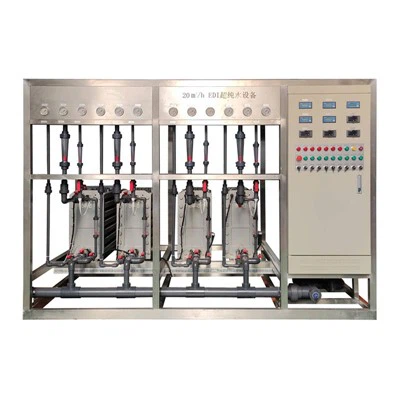
First, let’s start with the core function of RO technology, because that’s where all the benefits stem from. Reverse osmosis is a water purification process that uses a semipermeable membrane to remove contaminants that standard filters (like carbon or sediment filters) can’t touch. Here’s how it works, in simple terms: regular water is pushed through the membrane, which has tiny pores only 0.0001 microns wide. To put that in perspective, a human hair is about 50 to 100 microns thick. That means contaminants like lead, chlorine byproducts, PFAS (the so-called “forever chemicals”), bacteria, and even dissolved salts get trapped on one side of the membrane, while clean, purified water flows through to the other. Most standard tap water filtration systems only catch larger particles—they leave behind those hidden, harmful substances that can build up over time and affect your health.
One of the most immediate benefits for residential users is better taste and odor. If your tap water has a metallic aftertaste (from old lead pipes, common in older homes across the U.S.) or a faint chlorine smell (added to kill germs in municipal supplies), an RO system will eliminate those almost entirely. A few months back, I installed a system for a family in Chicago whose kids refused to drink tap water because it tasted like “swimming pool water.” Within a week, they told me their kids were filling reusable water bottles nonstop, and they’d cut their grocery store bottled water budget by 70%. That’s not just a small win—it’s a change that saves money and reduces plastic waste, two big priorities for many households now. For small businesses like cafes or coffee shops, this is even more impactful. I’ve worked with three local coffee shops that switched to RO systems, and their latte and espresso reviews started mentioning “smoother, cleaner flavor” within a month. Baristas told me the RO water didn’t leave a bitter aftertaste in dark roast coffee, so they didn’t have to add extra syrup to mask it. It’s a small detail that directly boosts customer satisfaction and repeat visits.
Beyond taste, RO systems provide consistent, reliable purification that’s critical for sensitive uses. If you own a small manufacturing facility that uses water for product ingredients or cleaning, even small amounts of contaminants can ruin batches or damage equipment. For example, a local car parts shop I supply recently had a problem: their original filtration system left hard mineral deposits in their spray washers, which meant they had to replace the equipment every 18 months. After installing an RO system, the mineral deposits stopped, and their washer equipment now runs three years without issues. That’s a huge cost savings for them—something I always emphasize to business owners: the upfront investment in an RO system pays for itself in avoided repair and replacement costs over time. For medical or dental offices, RO water is non-negotiable. These facilities use water for sterilization, and even trace amounts of minerals or bacteria can cause infections in patients. I’ve had a few dental clinics reach out because their old systems weren’t meeting OSHA standards, and an RO system was the only solution that passed their inspections. That’s when I really see the purpose of this work: it’s not just about selling a machine—it’s about helping people stay compliant and keep their patients safe.
Another underrated benefit is that RO systems reduce reliance on single-use plastic bottles. Let’s do a quick math check: the average American drinks about 1 gallon of water per day. If you’re buying bottled water, that’s four 16-ounce bottles a day, 1,460 a year. For a family of four, that’s almost 6,000 bottles annually—most of which end up in landfills, where they take 450 years to decompose. I had a customer in Austin who switched to an RO system last year, and he calculated he saved $450 on bottled water in the first six months. He also told me he stopped having to carry cases of water into his house from the grocery store, which was a huge convenience for his pregnant wife. For businesses, the plastic savings add up too. A small office with 10 employees goes through about 10 bottles a day; replacing that with an RO system eliminates 2,600 plastic bottles a year for just that one office. It’s a small step, but when thousands of homes and businesses make that switch, it adds up to less plastic waste in our oceans and landfills.
Wait, but what about wastewater? I know a lot of people ask that, and for years, it was a valid concern. Early RO systems did waste a lot of water—for every gallon of purified water they produced, they’d drain three to four gallons down the drain. But modern systems, which I sell and install, have come a long way. Newer RO units now use up to 50% less wastewater, and some even have recirculation systems that capture that wastewater for use in gardening, cleaning, or even flushing toilets. I work with a small apartment complex in Phoenix that uses their RO wastewater to water the 12 units’ front yard gardens, so they don’t have to pay for extra city water for landscaping. That’s a smart, sustainable solution that turns a perceived downside into a useful resource. I always make sure to explain that to customers who are worried about water waste—this isn’t the inefficient system of 10 years ago; it’s a tool that saves money and reduces your overall water footprint.
Durability and low maintenance are other big benefits, especially for people who don’t want constant upkeep. A quality RO membrane, if maintained properly, lasts 2 to 3 years before it needs to be replaced. The pre-filters (which catch larger particles like sediment and chlorine) only need to be changed every 6 to 12 months—most people set a reminder on their phone, and it takes 10 minutes to swap them out if you do it yourself. For business customers, that means minimal downtime: I’ve rarely had a client have to shut down their operations to replace a filter or membrane, because we schedule routine maintenance checks that fit around their business hours. I think a lot of people shy away from RO systems because they assume they’re high-maintenance, but that’s not true for the residential and small commercial units I supply. They’re designed to run silently under your sink or in a utility closet, with no fancy electronics to break down—just a few filters and a membrane that do the work.
Let’s also talk about long-term health impacts, because that’s the reason most customers initially reach out. Tap water, even from municipal systems, can have contaminants that are hard to detect. A 2023 EPA study found that over 200 unregulated contaminants are present in U.S. drinking water, including PFAS, lead, and certain pesticides. Most of these aren’t tested for regularly, so you might not know they’re in your water until it’s too late. RO systems remove 99% of these contaminants, according to independent testing from the Water Quality Association. I’ve seen customers with well water, which is not regulated the same as municipal water, especially benefit. Well water can have high levels of iron, manganese, and bacteria that standard filters don’t remove. One rural customer in Iowa told me his well water had so much iron that his white shirts would develop yellow stains after a few washes. After installing an RO system, the stains stopped, and his laundry looked brighter than it had in years. For families with young kids, this is a huge peace of mind—you can be sure the water your child is drinking, cooking with, and using to make formula is as pure as possible.
Of course, I’d be remiss not to mention a common misconception: some people think RO water is “too pure” and lacks minerals that are good for you. That’s a fair point, but it’s easy to fix. The purified water from an RO system doesn’t have the minerals like calcium and magnesium that give water a “hard” taste, but those minerals aren’t necessary from drinking water anyway. The human body gets most of its minerals from food—leafy greens, nuts, whole grains, and dairy. A spinach salad has more calcium than a glass of water, so removing small amounts of minerals from your drinking water doesn’t impact your health. If you prefer a slightly mineral-rich taste, you can add a remineralization filter to your RO system, which puts back small amounts of safe, beneficial minerals without the harmful contaminants. I always offer that as an optional add-on, so customers can choose what works for their taste preferences.
As someone who’s been in this industry for over a decade, I’ve seen how RO technology has evolved from a niche industrial tool to a accessible, practical solution for homes and small businesses. When I first started, only large factories could afford RO systems; now, residential units cost less than $500, and commercial units for cafes or small offices are under $1,500. That affordability is part of why more people are making the switch. It’s no longer a luxury—it’s a standard for clean, reliable water.

If you’re considering making the switch to an RO purified water system, I’m here to help. Whether you’re a homeowner looking to improve your family’s water quality, a cafe owner wanting better coffee flavor, or a small business needing compliant water for your operations, I can walk you through the best options for your needs, answer any questions, and help you find a system that fits your budget. There’s no one-size-fits-all solution, and I’ll make sure you get exactly what you need, not a package that’s overpriced for your use case. To discuss your needs and explore the right RO purified water equipment for you, feel free to reach out.
RO Purified Water Equipment References
- U.S. Environmental Protection Agency. (2023). Unregulated Contaminant Monitoring Rule 5: Annual Assessment Report.
- Water Quality Association. (2022). Reverse Osmosis System Performance Testing Standards.
- National Sanitation Foundation International. (2021). Residential Drinking Water Treatment Systems: Performance and Safety Guidelines.
- Pacific Institute. (2020). Plastic Bottle Waste and Water Footprint Analysis for Residential and Commercial Use Cases.
Shandong Yanuo Environmental Protection Equipment Co., Ltd.
We’re well-known as one of the leading ro purified water equipment manufacturers and suppliers in China, featured by quality products and good price. Please rest assured to buy bulk ro purified water equipment made in China here from our factory. Customized orders are welcome.
Address: North Side of the Road, 1,000 Meters West of the Intersection of Fenghuangshan West Road and Provincial Highway S102, Wangfu Subdistrict, Qingzhou City, Weifang City, Shandong Province.
E-mail: ynhb.499973983@gmail.com
WebSite: https://www.zkyaruo.com/
