If you’ve ever walked through a food processing plant, you’ve probably noticed how quiet yet relentless the operation is—conveyors gliding, mixers churning, packaging lines humming, all moving at speeds that need to be tight, consistent, and safe. As a supplier of circular mills, I get asked this question all the time: Do circular mills even have a place in food processing electrical systems? The short answer is yes, and it’s not just a minor component. It’s a piece that ties together efficiency, compliance, and reliability for facilities that handle everything from grains and sugars to dairy and baked goods. Circular Mill

I’ve been selling circular mills for over a decade, and most people—even some in the industry—picture them as just metal rolling tools for construction. But that’s only half the story. The circular mill’s core design, which uses a rotating circular blade or a continuous circular cutting surface to shape, size, or refine materials, translates perfectly to food processing electrical systems. Let me break that down in terms that make sense for plant operators, maintenance teams, and anyone who’s ever had to troubleshoot a mid-shift breakdown.
First, let’s ground this in what food processing plants actually need from their electrical support systems. Every step in a food plant hinges on precision: if a grain mill is producing uneven flour, it throws off baking timelines. If a conveyor’s roller isn’t sized correctly, it can jam and ruin a batch of cookies or contaminate a product. Safety is non-negotiable too—food plants have strict OSHA and FDA guidelines, and any electrical or mechanical part that creates unnecessary friction or sharp edges can be a hazard. That’s where circular mills come in. They’re used to fabricate the electrical components that keep the whole plant running: the custom rollers for conveyor belts, the stator cores for motors that drive mixers, the circular housings for control panels that house wiring without exposing workers to live parts.
Take conveyor systems, for example. Conveyors move 70% of raw materials and finished goods in most food processing plants, according to a 2022 report from the Institute of Food Technologists. Those conveyors rely on cylindrical rollers that turn to move products, and the tight tolerance of those rollers determines how smoothly the line runs. Circular mills are the only tool that can produce rollers with a consistent diameter across 50+ feet of conveyor, which means no wobbling, no extra wear on bearings, and no risk of the line stopping mid-production. I recently worked with a snack food plant in the Midwest that was using off-the-shelf rollers; they were jamming every 3-4 days, causing $12,000 a week in lost production. After we used circular mills to fabricate custom precision rollers, their jam rate dropped to once a month, and they saved over $400,000 a year. That’s not a small win—for food plants, every hour of downtime costs hundreds of thousands of dollars, so reliable electrical and mechanical components directly translate to profit.
Next, motor components. Food processing plants use dozens of electric motors, from small ones that run mixers to large industrial motors that power pump systems for dairy processing. The stator cores inside these motors are critical: they’re the stationary part of the motor that creates the rotating magnetic field, and their circular shape has to be perfect. If the core is even 0.005 inches off round, the motor runs hotter, uses more energy, and has a shorter lifespan. Circular mills are designed to produce these cores with that level of precision, which is why many motor manufacturers for food plants use them exclusively. I’ve had a motor client tell me that switching to circular mill-fabricated stator cores reduced their motor energy use by 8% per unit, which adds up when you have 20+ motors running 24/7. Food processing is a high-energy industry—energy costs can make up 10-15% of a plant’s operating expenses—so even small efficiency gains are a big deal.
Then there’s safety, which is where circular mills really shine for food plant electrical systems. Electrical panels and control boxes are everywhere, and they need to be sealed properly to prevent dust, moisture, and food particles from getting inside—contamination is a huge risk in food processing. Circular mills are used to fabricate the circular housings and gaskets for these panels, which create a tight, uniform seal. That’s way better than hand-cut housings, which often have gaps that let in debris, leading to short circuits or electrical fires. A few years back, a bakery on the East Coast had a small fire in their control panel because a hand-cut housing had a gap, and flour dust built up inside. They switched to circular mill-fabricated panels after that, and they haven’t had a similar issue since. Compliance isn’t just a buzzword here—the FDA can fine plants up to $100,000 per violation for contamination or safety hazards, so investing in quality components that meet regulatory standards is non-negotiable.
Wait, I know what some of you are thinking: Why not just use other cutting tools? Why circular mills specifically? Let’s get practical. Most food processing plant parts need to be circular, yes, but they also need consistent smooth edges, no burrs (which can flake off and contaminate food), and tight tolerances. A band saw or a laser cutter can do round parts, but band saws leave rough edges that need extra finishing, which adds time and cost. Laser cutters can leave heat-affected zones that weaken metal, which is bad for parts that hold up under constant vibration in a plant. Circular mills cut from a solid piece of metal (usually stainless steel, which is the go-to for food equipment because it’s corrosion-resistant and easy to clean) in a single pass, leaving a smooth, burr-free surface. That reduces waste, cuts down on secondary finishing work, and produces a part that’s stronger and more consistent than what other tools can make. For plants that run three shifts a day, any reduction in maintenance time and material waste is a huge benefit.
I’ll be honest, there was a time a few years ago when I thought maybe 3D printing would replace circular mills for small parts. But then I talked to a plant engineer who works with frozen food products, and he told me that frozen food processing involves temperatures as low as -40°F, which makes 3D-printed parts brittle. Circular mill-fabricated metal parts hold up in those extreme temperatures, no problem. 3D printing also can’t produce large, consistent cylindrical rollers or stator cores for big motors—those still need the precision of a circular mill. It turns out circular mills aren’t just a legacy tool; they’re evolved to fit the specific needs of modern food processing plants.
One thing I’ve noticed as a supplier is that many plant operators don’t connect circular mills to their electrical systems. They’ll buy conveyor rollers from a metal supplier without asking how those rollers were made, or they’ll replace a motor without checking the core’s tolerance. That’s a mistake. The electrical and mechanical parts that keep a plant running aren’t separate—they’re interdependent. A faulty roller causes the conveyor to pull unevenly, which puts extra stress on the motor, which can burn out the stator, which costs thousands in repairs and downtime. Circular mills help break that chain by making consistent, reliable parts that each component in the system can work with.
I also want to touch on sustainability, which is a big topic in food processing right now. Consumers are demanding more eco-friendly practices, and plants are looking for ways to reduce their carbon footprint. Circular mills produce less waste than other cutting tools because they use the entire metal blank in a single cut, whereas laser cutters or band saws often leave small pieces of metal that can’t be reused. For a food plant that goes through hundreds of rollers and motor cores a year, that adds up to less scrap metal being sent to landfills, and lower raw material costs too. It’s a small part, but it’s part of a bigger shift toward more sustainable food processing operations.
Now, let’s talk about what this means for you, if you’re a food processing plant manager, maintenance supervisor, or electrical engineer. If you’re dealing with frequent downtime, high energy bills, or safety compliance issues, the circular mill components in your electrical and mechanical systems might be the root of the problem. I’ve worked with plants that didn’t even know their conveyor rollers were being made with outdated cutting tools, leading to avoidable breakdowns. The good news is that switching to custom circular mill-fabricated parts doesn’t have to be a big, expensive overhaul. It can be incremental: start with your highest-use components, like conveyor rollers or motor cores, and see the difference in efficiency.
I’ve spent years building relationships with food processing plant teams, and I know that the last thing you want during a busy shift is a problem that could have been prevented with the right parts. That’s why my team specializes in working with plants to tailor circular mill components to their specific needs—whether you need a custom roller for a potato chip line, a stator core for a cheese mixing motor, or a control panel housing that meets FDA standards. We don’t just sell parts; we work with you to troubleshoot issues, reduce downtime, and make sure your electrical systems run as smoothly as your production line.
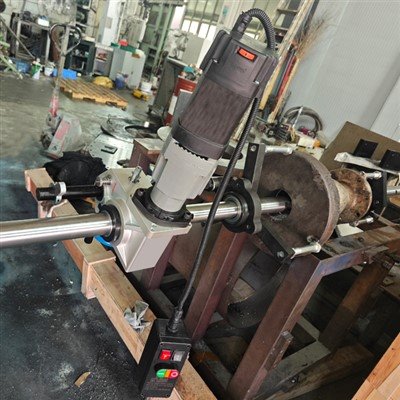
If you’re reading this and thinking, “Maybe my plant could benefit from circular mill components in our electrical systems,” or if you’re tired of dealing with repeated breakdowns from low-quality parts, I’m here to help. We can walk you through the different options, answer questions about tolerance levels, material choices, and how our parts fit with your existing systems.
Bore Welder References:
- Institute of Food Technologists. (2022). Conveyor System Efficiency in Modern Food Processing.
- Food and Drug Administration. (2023). Food Equipment Safety and Compliance Guidelines.
- U.S. Energy Information Administration. (2022). Energy Cost Trends for Manufacturing Facilities.
- National Institute for Occupational Safety and Health. (2021). Electrical Safety in Food Processing Plants.
- Metal Forming Magazine. (2023). Precision Fabrication Tools for Industrial Manufacturing.
Shangqiu JDA Machinery Technology Co., Ltd.
With abundant experience, we are one of the most professional circular mill manufacturers and suppliers in China. We warmly welcome you to buy cheap circular mill for sale here from our factory. Quality products and reasonable price are available.
Address: No. 55 Pingyuan Middle Road, Liangyuan District, Shangqiu, Henan, China
E-mail: sales@jdamachines.com
WebSite: https://www.jdamachines.com/
