If you’ve ever walked a new residential development, peeked at a commercial build mid-construction, or just stared at the price tag on a home renovation, you’ve probably asked a quiet, practical question: what’s the real cost of structural timber compared to all the other materials lined up to build walls, roofs, and frames? For 12 years, I’ve run a small structural timber supply business, and I’ve answered this question at least a hundred times—usually to homeowners trying to stay on budget, builders weighing tradeoffs, and architects chasing both integrity and price. Most sources online give you a single, inflated dollar number for each material, but that’s useless. The cost of building isn’t just a per-board price; it’s about what you get for that price, and how that cost changes over time. Let’s break this down the way I do with every customer: no fluff, no sales hype, just numbers and real-world experience. Structural Timber
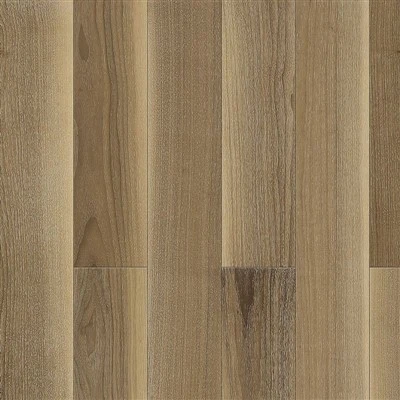
First, let’s define what we’re talking about when we say “structural timber.” I’m referring to dimension lumber—studs, joists, rafters, beams graded for load-bearing use, typically made from softwoods like pine, spruce, and fir. This is not the decorative trim or decking you use for finishing touches; it’s the skeleton of the build, the stuff that keeps a roof from caving in and walls from shifting. The main competitors for this role are steel, concrete, and cross-laminated timber (CLT)—a mass timber product you might have heard of in recent years. I’ll stick to these four because they’re the big players in North American and European residential and mid-sized commercial construction, the markets I work in every day.
Let’s start with the upfront cost, the number most people fixate on first. As of 2024, the average price for standard 2x4x8-inch structural pine stud (the most common size for interior walls) is around $3.50 per piece. That’s $1.75 per linear foot, or roughly $2.20 per board foot. For context, a 10-foot wall frame needs 12 studs on average, so that’s $42 for the studs alone for a 10-foot wall. Compare that to steel studs, which are the closest direct alternative. Standard 2×4 steel studs go for about $5.25 per piece—$2.62 per linear foot, almost 50% more than timber. The math here is simple for most residential builds: steel studs will add roughly $1,500 to $3,000 to a 2,000-square-foot home’s framing cost compared to structural timber.
Now concrete, the other big heavyweight. For a typical home, concrete is used for foundation footings and slabs, but it’s also a competitor if you’re using precast concrete beams or tilt-up walls for small commercial builds. Ready-mix concrete costs roughly $125 to $150 per cubic yard, delivered. A 2,000-square-foot home’s 4-inch slab takes about 25 cubic yards of concrete, so that’s $3,125 to $3,750 just for the concrete, before you add formwork, labor, and reinforcing steel. For a similar span, a glulam timber beam (used instead of a concrete or steel beam) might cost $1.20 per linear foot per inch of depth. A 12-inch deep glulam beam for a 20-foot span would be $24 per linear foot—so $480 total for the beam, plus associated fasteners. That’s a fraction of the concrete beam’s cost, which would run closer to $1,500 for the same span and load capacity.
Wait, but what about CLT, the trendy mass timber material I mentioned earlier? CLT panels are made by gluing multiple layers of timber together, so they’re prefabricated wall and floor panels that act as both structure and finish. They’re more expensive upfront than standard dimension timber: as of 2024, CLT panels cost around $15 to $20 per square foot, compared to $8 to $12 per square foot for a stick-built structural timber frame. But don’t write CLT off immediately—its labor savings can offset the upfront cost. If you’re building a mid-rise commercial building, CLT panels go up in a fraction of the time it takes to frame with standard timber, because most of the work is done pre-fabricated. For a 5-story office building, you might cut framing labor by 30% with CLT, which can eat into that price gap. Still, for most single-family homes and small outbuildings, standard structural timber is far cheaper upfront than CLT.
But here’s the part that most people don’t factor in: upfront cost is only half the story. There’s the long-term cost, the cost of installation, and the hidden costs that creep up once the build is complete. Let’s talk about installation first, because that’s a huge variable most homeowners miss. Structural timber is lightweight, easy to cut with basic tools, and requires no specialized training to install. A framer with a couple years of experience can knock out a wall frame in an hour, no fancy lifting equipment needed. Steel studs, on the other hand, are brittle, harder to cut, require specialized tools (like tin snips that cost hundreds of dollars, or a screw gun with heavy-duty bits), and are heavier—so you might need extra hands or small cranes to lift them into place. I’ve seen small builders add 20% to their framing labor costs just switching from timber to steel, because of the extra time and effort. Concrete is even worse: you need a concrete pump, formwork, and a crew with specific expertise to pour it correctly. The labor for concrete is usually the most expensive part of the foundation, which is why I tell customers that even if concrete materials were cheaper, the labor alone makes it a far pricier option for most small builds.
Then there’s durability and maintenance, the hidden long-term costs. A lot of people think timber rots, and it can—if it’s not treated or installed correctly. But properly graded, pressure-treated structural timber is rated for ground contact, and with proper flashing and ventilation, it will last 50 years or more. Compare that to steel: steel rusts, especially if it’s exposed to moisture or salt air (think coastal areas). I’ve had customers in Florida call me about steel studs that started rusting through after 10 years because of salt exposure, leading to thousands of dollars in repairs. Concrete cracks, it’s porous, and it can develop mold or structural issues if the foundation shifts—something that’s far less common with timber frames on properly built foundations. And here’s a big one: energy efficiency. Structural timber has an R-value (insulating value) of roughly 1.25 per inch, while steel is a conductor, so a steel stud wall has an R-value of only around 3 per linear foot, compared to 7 per linear foot for a timber wall. That means a timber framed home will use less heating and cooling energy over its lifetime—saving the average homeowner $1,500 to $2,000 per year on utility bills, according to the US Department of Energy. That’s not a small number; over 30 years, that’s $45,000 to $60,000 in savings.
Now, let’s talk about market volatility, something every builder and homeowner has felt in the last 10 years. Structural timber is a natural, renewable resource, as long as it’s sourced responsibly. When lumber prices spiked in 2021 and 2022, hitting a record $1,733 per thousand board feet, that terrified a lot of people. But steel and concrete prices are just as volatile, if not more. Steel is tied to global iron ore prices, which can swing wildly based on international trade policies. Concrete depends on cement production, which is energy-intensive, so its price jumps when energy costs go up. During the 2022 energy crisis in Europe, concrete prices rose 40% in six months, while structural timber prices only rose 18% because many European forests are managed sustainably and local production kept supply steady. Long-term, historical data backs this up: over the last 20 years, the average annual price increase for structural timber is around 3%, compared to 4.5% for steel and 5% for concrete. So while timber had a short-term price blip, it’s actually more stable over time, which is a huge plus for anyone budgeting for a build years in advance.
Wait, but let’s not pretend structural timber is always the cheapest option. There are scenarios where another material makes more financial sense, and I’ll be honest about that. If you’re building a 10-story commercial building, mass timber might be cheaper than steel or concrete because of its speed of construction and lower structural weight. For a coastal build in a high-wind zone, some engineers specify steel for its consistent strength, even though it’s more expensive upfront. And if you need a foundation for a heavy structure like a large warehouse, concrete might be the only practical option. But for the vast majority of projects—single-family homes, duplexes, small commercial buildings, barns, additions—structural timber is almost always the most cost-effective choice when you add up all the factors, not just the per-board price.
Another big factor is sustainability, which translates to long-term cost in a lot of ways. More and more homeowners are willing to pay a premium for sustainable builds, and structural timber is the only structural material that’s carbon-negative. A 2,000-square-foot home built with structural timber stores roughly 10 tons of carbon dioxide, according to the Forest Stewardship Council (FSC). That can add tangible value to your home, with appraisers noting that sustainable builds sell for 5-10% more than standard builds, per data from the National Association of Realtors. Steel and concrete are major carbon producers: concrete accounts for 8% of global carbon emissions, steel accounts for 7%. So even if their upfront price is the same, timber gives you a resale value boost that other materials don’t.
I’ll wrap this up with a story that stuck with me last year, to make this real. A customer from northern Ohio called me in March 2023, mid-way through building a custom home. He’d switched to steel studs halfway through because he thought they were cheaper, and by the time he called me, he was already $2,700 over budget, with another $1,800 in unexpected labor costs because his framer couldn’t keep up with cutting and installing the steel. He switched back to structural timber for the rest of the framing, and ended up saving $3,500 total, even after accounting for the waste from cutting leftover timber. He also told me his utility bills in the first winter were $180 lower than his neighbor’s identical home that was built with steel studs. That’s the kind of real-world math that numbers can’t always capture.
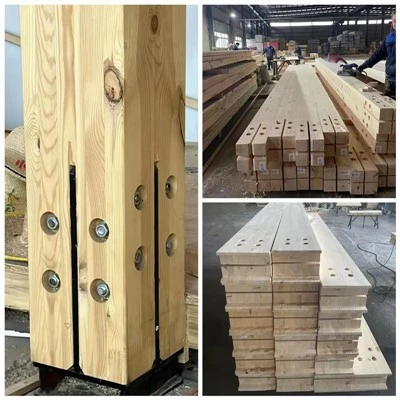
At the end of the day, the cost of structural timber isn’t just a per-unit number on a spreadsheet. It’s about the total: upfront price, labor, long-term maintenance, energy savings, resale value, and stability. For my business, that’s what I focus on when I talk to customers—giving them the full picture, not just a sales pitch for timber. If you’re planning a build, a renovation, or just trying to figure out what material makes sense for your project, I’m happy to walk through the numbers with you one-on-one, no pressure, no fine print. Let’s talk through your specific needs, your budget, and what you’re trying to build, so you can make the choice that’s right for you.
Interior Wood Products References
US Department of Energy. (2023). Energy Efficiency in Residential Framing. Energy Savings and Advanced Construction Technologies Office.
National Association of Realtors. (2024). Sustainable Home Values: Appraisal Trends for Green and Mass Timber Construction.
Forest Stewardship Council. (2023). Carbon Storage in Structurally Engineered Wood Products. FSC Global Research Report.
International Code Council. (2022). Structural Material Cost Benchmarks for Residential and Mid-Rise Commercial Construction. ICC Development Services.
Zendekin Low-Carbon Technology Co., Ltd.
We are one of the most professional structural timber manufacturers and suppliers in China. With abundant experience, we warmly welcome you to wholesale customized structural timber from our factory. If you have any enquiry about quotation, please feel free to email us.
Address: Building 3, Yincheng INC Center, No.59 Tianyuan West Road, Jiangning District, Nanjing, Jiangsu, China.
E-mail: 13813916590@126.com
WebSite: https://www.zdqeco.com/
